Sunday, October 13, 2013

Community

As we traveled the world for the past 16 months, we have found ourselves immersed in a variety of new and interesting communities.  If one describes community as a group of individuals with shared interests, values, and goals, then the geographic boundaries of place become less important than time.    The community of long term travelers is very different than the community of vacationers.  Those who choose to couchsurf or stay in hostels and homestays are unlike people who stay primarily in resorts.   Each country and region within countries had communities of people to teach us lessons about their lives and dreams, aspirations and fears.  While we were often engaging with individuals who supported tourism, we ventured into other elements of distant societies.  We attended church with people, sat down and shared food with natives willing to tell us about their lives, celebrated holidays with families and new friends.  We also, tentatively at first, entered into the global social media community of blogs, Facebook, Pinterest , Thorntree and Tripadvisor. 

So imagine our surprise to find that the most profound lessons we were to learn about community would be back where we started, in Gunnison, Colorado.  In our previous blog posting, “Push Pause”, we mentioned how humbled we were by the offers of assistance that emerged when people learned that we were going to stay while Sally had surgery.  The degree to which individuals opened not only their homes, but their hearts to us, provided the elixir of healing we needed for both Sally’s recovery from surgery and for the weariness that emerges from living from a backpack for a year.  

We realize that coming back to Gunnison reminds us of the first decade of our 23 year relationship.  During much of that decade, we faced the challenge of distance.  It was not uncommon for more than 1,500 miles to separate us for weeks or months at a time.  For us, the distance aspect of our emerging partnership strengthened our bonds.  We experienced the intense joy reunification brought every month or so.  We reveled in the excitement of being present with the person we loved. We had stories of growth, painful and adventurous, to share with each other. And we were keenly aware of the significance of each precious second of time together, knowing that our trajectories would again separate us in the next few days or weeks. 
 Our past few weeks in Gunnison have taken us back to the pleasure and challenge of those distant relationship years.  We are keenly present with friends with whom we often had insufficient time when we worked within our community.  There is a hunger to learn about their growth, painful or adventurous, as well as their hopes, dreams and aspirations.  We have come to recognize the enormous number of individuals living in one place for almost 20 years brings into lives.  We knew, in some abstract way, that we loved this place and people; however, returning from a long journey with the intent of leaving again, has demonstrated the bonds that we share with this community now and forever.  Much like our reunification with each other during our first decade, we know with increasing certainty the community of this special high mountain valley has our hearts.   It is the type of place that comes together in challenging times, as we witnessed when a group of special teens put on a benefit concert raising funds for families requiring assistance from our local hospital’s oncology department.  While we have seen markets in every corner of the globe, none are as sweet as the dozen or so booths of our Saturday farmers’ market where we have been greeted like long lost friends.   We will enjoy exploring new communities and places during the next months of our lives, but it will be Gunnison that we look toward as the place to become rejuvenated as we continue to learn with humility and to give with grace.

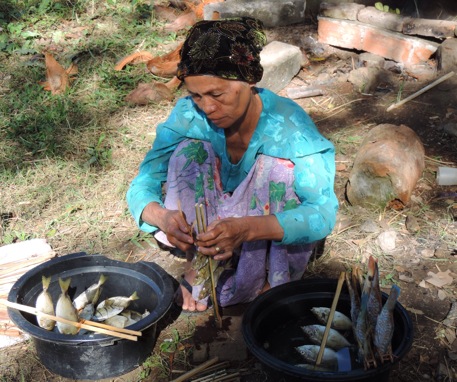
Images are of two of our favorite Gunnison community members, Kathleen Kinkema and Rogene McKiernan, Raphael Tomany playing at a benefit for Gunnison's Oncology Department, and Matt from Thistle Whistle Farm at the Gunnison Farmers' Market.  Posted in Gunnison, CO.

Friday, September 20, 2013

Push Pause

The pause button.  We have all had moments in which we "push pause."  It might be because something more important than what we were listening to or watching has entered into the room or our lives.  It can be an opportunity to rewind and reflect on the images or sounds we have just experienced.  We are now "pushing pause" on our travels for both of those reasons.

Sally had been worried for the last several months that her rheumatoid arthritis was worsening.  First came the pain in her left shoulder and wrist joints that she described in a previous posting "Carpe Diem."  Then came the weakness, as each day she could do less with that arm and hand.  We know that the RA is a degenerative, painful disease.  It is a major reason we have chosen to travel now while we can still travel the harder days in public buses, cramped boats, and simple sleeping arrangements.  But we were hoping for at least two years.

We are ecstatic to be pushing pause now because Sally has learned that, rather than the degenerative RA weakening her joints in her left arm, years of hard physical labor and a few falls have caused a couple of repairable issues.  Few people hug their orthopaedic surgeon when told the tough news that they are facing a couple of surgeries.  Sally gratefully gave Dr. Chamberland one!  When one has a life long chronic disease good news comes in strange forms.

We are happy to be spending six months in the states as Sally undergoes the surgeries and the physical therapy she will need to prepare us for Nepal in March. We are also completely humbled at the response of our community and family in Gunnison and elsewhere. People have offered us rooms, houses, cars, trucks, bikes, clothing and places to watch the Broncos. When we left the Gunnison Basin fifteen months ago, we knew we would return to visit, but we were uncertain if it would ever be "home" again.  As we crossed the Colorado border and were swept up in the hugs and warmth of our community, we knew that we were travelers who had returned home.  We now look forward to exploring our community in the way we have tried to explore the world; learning with humility, and, where possible, giving with grace.

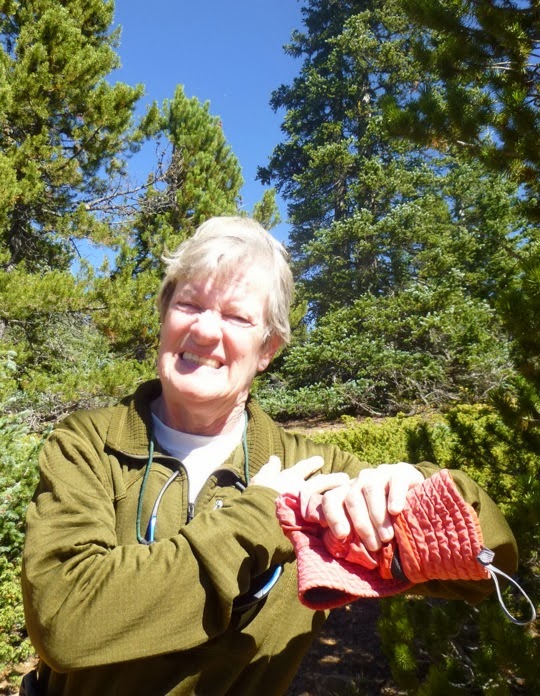
Images are of Sally massaging her shoulder and a hike in the Gunnison Basin.  Posted from Gunnison, Colorado

Thursday, August 15, 2013

Culture Shock

It is a real surprise when, after almost 14 months of international travel in about a dozen countries, there is a confrontation with culture shock.  We have been fascinated, intrigued, curious, and confused by cultural practices and daily life.  But until Thailand, we had not really felt the disorientation that comes with being a flopping fish out of water.  Culture shock.

It surprised us.  We have learned to quickly adapt to novel and sometimes even bizarre situations without so much as an eye blink.  However, things were about to get a bit more complicated.  Thank goodness we had a little bit of a warning from a fellow traveler and friend, Juraj, who kindly went out of his way to reunite with us in Bali.  We had last seen Juraj on a mountain in Malaysia.  He typifies a young, gracious, independent world backpacker as he travels from his native Eastern Europe through the world.  He has given us excellent travel advice, but mentioned that Thailand was hard for an independent traveler.


Until this point in our journey, one of us either somewhat understood the language (with perhaps the exception of southern New Zealand and certain ranchers in Australia) and we both could read signs.  Until now, we had traveled in areas where letters are written with the Roman alphabet (see map of the Roman alphabet global distribution).  We were also in countries where English is typically taught in primary and/or secondary school.  While many people we met had forgotten much of the English or had not been able to attend much school, most used and/or understood some words or there was generally a person nearby who was relatively fluent.

None of this was true in Thailand.  In the areas we first visited, we quickly learned the word "farang" for foreigner, but we were in a place in which not a single road sign, menu, or posted paper made sense.  The words were long, ornate, and created by completely unrecognizable scribbles that could have been a lost ancient language to our Roman alphabet trained brains.   Few spoke English and our Thai was limited to "good morning" and "thank you."  Even our reliable "Google Map App" had mysterious scribblings as street names.  We were lucky as we began the trip staying with two wonderful guys, Ben and Yom.  Yom is a native Thai and his help in the first week greatly reduced the dual challenges of a new culture and written language.  Ben is a recovering Southern Californian who has made Thailand his home for the past 8 years and graciously invited us to it when we met in the Philippines.  Both have been excellent hosts, helping us ease past the initial confusion and overwhelming sense of "different".

Despite Ben's and Yom's help, we are still experiencing some of our first real taste of culture shock as we crossed our newest frontier into mainland Asia.  We are thankful for the year of travel leading us now to visit places with people of good will but no common oral or written language.  Our first year gave us the confidence to move through large cities and countrysides in new places with different currencies, logistics, and cultures.  We can now apply these lessons to our future destinations in Asia and beyond.  We will have to change some of how, and possibly where, we travel as we work out new logistic challenges.  However, it is these very challenges that we love.  While they can tire and test us at times and make us appreciate how easy it can be back at home, they inspire us and, most importantly, drive us to learn.

Posted in Angsila, Thailand.  Images are of a country map of where the Roman alphabet is in use, a typical Thai language plaque at a national park, and Ben and Yom, our hosts extraordinaire!

Sunday, July 28, 2013

We're coming home!

The last thing we anticipated over a year ago at the start of our journey is that by the thinnest margin of one vote, a Supreme Court decision would bring us home.   Our life is similar to so many of our friends because we met almost 25 years ago, knew within a year that we had found the person we wanted to live with "till death do us part", and made a personal commitment to a lifetime partnership.

Unfortunately, our commitment has never been recognized by the Federal Government as valid so we were unable to get Jess insurance, tax, or annuity benefits through Sally's federal job.  These would have been financially helpful in the past, but are even more important now as we travel.  If Jess was a man, we would have saved almost $4,000 dollars in health insurance last year, $6,800 this coming year and almost $70,000 over the next decade, and she would have received better coverage with lower deductibles.  If male, Jess would also receive half of Sally's annuity and all of her social security survivor benefits if Sally passed first.  Our current life expectancy calculations result in projected benefits for Social Security being worth an additional $159,264 and annuity benefits being $62,784.

None of those tangible economic benefits were possible while the 1996 Defense of Marriage Act (DOMA) defined, for the purpose of thousands of federal laws and rules, that marriage was only legitimate between a man and a woman.  DOMA barred same-sex married couples from being recognized as "spouses" for the purpose of receiving federal benefits such as health insurance, social security survivors' benefits, inheritances, annuities, and the filing of joint tax returns.

Things changed dramatically on June 26, 2013, when the Supreme Court, in a 5-4 decision, struck down parts of DOMA as unconstitutional, agreeing with the president who said "This was discrimination enshrined in law. It treated loving, committed gay and lesbian couples as a separate and lesser class of people."  We don't perceive that we are particularly political or extreme in our views; however, it does sadden us and grind us down a bit when we are not allowed the same benefits because of the simple choice of who, and what gender, we love.  We have always been well treated by our friends, colleagues, families and employers, but have been prohibited some tangible benefits at every stage of our lives routinely provided to our heterosexual friends.

For us, it is a simple financial decision to fly to California, stand with our witnesses who have supported us for over two decades, and tie the knot.  It is also an incredibly symbolic decision that slowly, in our country, we will be treated with more equality than when we left a year ago.  Same-sex marriage is allowed in 13 states and prohibited in 29.  At least now, if married in one of those 13 states, we can receive the same federal benefits as our heterosexual friends.  So we are coming home.  And getting married.

We hope to see family and friends for the few short weeks we plan on being home before we head to Nepal.  We miss you, and we will have much to celebrate with you!

Images are of a much younger couple on an ATV doing research in 1990 in the Gunnison Basin, a Galapagos class trip in 2004, and a quiet moment in Bolivia last year on the salt flats.  Posted in Yogjakarta, Java, Indonesia.

Friday, July 26, 2013

Here be Dragons


Komodo Dragons are fierce, dangerous, 300 pound predators that frequently attack not only water buffaloes and local deer, but people.  Their red saliva can be seen along trails where they regurgitate undigested pieces of the previous week's meal.  The creatures are faster than one would think, and will even attempt to chase a fleeing person up a tree.  You can imagine our friends' surprise when we posted on Facebook that we had finally seen them and found the journey to them much more dangerous than the dragons.

We had come back to Indonesia after our previous April visit, in part, to find Komodo Dragons in the wild.  We also wanted to see more of the 17,000+ islands than what Bali alone could offer.  As we hopped down the island chain in eastern Indonesia, we were well rewarded by the incredibly diverse cultures we visited.  One island would have predominately Hindu natives, the next Muslim, and the third Catholic, all of whom also believe in magic.  Most of our travel was the moderately risky type we have described in previous posts, until we decided to take a two night "cruise" to bring us the last miles to the dragons.

For us, it was a pricey choice.  It cost $300 each for a "private" cabin and $200 for no cabin and a mat on the deck among several other people.  This is in a place that nice accommodations can be obtained for $30 a night and $5 buys a meal fit for a king.  We asked about the cabins, found one was available, and ascertained there was secure room storage for our bags, two beds (no bathroom), and a fan.  We decided to go "deluxe" and get a cabin.  The Perama Company representatives had been accurate.......there were two beds, although the slightly wider bottom consisted of a mattress on the floor and required a person to roll into it as the top bunk was claustrophobically close.  The "secure storage" was a 6 or 8 inch strip of floor between the mattress and the wall, and the fan was tiny and offered little relief in the tropics even for the top bunk where it was pointed.  All of that would have been workable except for a few additional surprises.  The first is that while Perama had been correct in telling us there were two bunks, they neglected to mention they had sold one to our roommate, a sweet girl from France.  When we realized that three of us needed to cram into a room built for two hobbit-sized beings, we talked to the company rep and guide before we left the first night.  They assured us that one of us could have a mat on the deck if the room was too packed.

Gamely, Jess prepared for her first night in the hot, dark, stifling space and rolled toward the wall only to find that the mattress was soaking wet.  After a few minutes something crawled over her.  She made the mistake of asking Sally to get a headlamp.  Imagine our "dismay" when we discovered a myriad of spider webs and cockroaches!  One giant roach was twitching its antennae and staring, appraising us carefully.  After the third heavy strike with a sandal it was stunned, not dead.  We gave it a burial at sea.  We can take a lot, but this space was too much for either of us, even after we fumigated it with our roommate's insecticide.  (We were to find that several people travel with insecticide in Indonesia and they thought we were crazy to travel without.)  Jess went in search of our guide to find out that the ship designed for 30-40 people had an all time high of 52,  and despite assuring us less than two hours earlier there was room on the deck, they stated there was none.

A fairly frustrated Jess then elected to sleep in the open air garbage bay at the back of the boat near the motors, preferring the smell of rotten fish and the sticky goo of spilled beer and pop to the comforts of the "deluxe cabin".  The benevolent Company did supply her with a thin mat on which to sleep..... Her new "bedroom" was between those sleeping on the upper deck and the bathrooms on the lower so she had lots of visitors stumbling by.  Sally "slept" on the the very outside edge of the lower mattress and our roommate on the top bunk.

The 52 passengers and 10 crew turned out to be about 20 more than the number of available life jackets.  While that may not matter much in most countries, in Indonesia, boats disappear frequently. The currents around Komodo Island are especially dangerous and a Perama Company craft had shipwrecked there two years ago.  On the second night, as we approached the notorious Komodo waters, our roommate woke us both up, afraid.  The seas were rough and we had just hit something in the water.  We tried to alleviate her fears by promising we would stick with her and getting headlamps and the two life jackets in our three person cabin ready.  One was virtually unusable and took 20 minutes with a Swiss Army knife to get it to the point where one of us might be able to wear it.  So much for reassuring our roommate.  Eventually dawn did come.  However, as we cued up for breakfast, the strong currents would hit the ship so hard, that 52 people would run to the "high side" on orders from the crew trying to help us avert disaster.  We have done similar maneuvers on a white water raft, but were surprised to be doing so on the cruise ship as it tilted toward the sea.

Ahhh... Indonesia.  Here be dragons.  Here, each mile traveled often has to be earned, so this was the journey to help us appreciate the destination.  The Komodo Dragons were fearsome and majestic. The beaches on the national park were pink and the coral reefs the healthiest we have encountered.  The people on the boat were fun and well traveled.  We would come back again... Just not on one of these boats!

Images are
of our new favorite land reptile; of our "cruise ship"; and of Sally in the breakfast line about 5 seconds before we needed to "high side"!  Posted in Bali, Indonesia.

Tuesday, July 23, 2013

Carpe Diem "Sieze the Day"


Traveling with a fairly severe disease is a bit of a challenge occasionally.  Rheumatoid Arthritis, an auto immune disease with which I was diagnosed about four years ago, is a disease for which there is no cure, and it can result in unbelievably painful, disfigured, and swollen joints.  It can worsen, even though there are a myriad of drugs, some with severe side-effects, for controlling the symptoms.  For some victims, drugs do not work, and they are relegated to painfully twisted joints and/or life in a wheelchair.  I have seen patients at a clinic with limbs (fingers, hands, knees) so bent and deformed that they cannot move let alone heft a pack down a trail.

My RA is currently fairly well under control with a somewhat mild drug.  The drug causes me to be pretty susceptible to sunburn, have an iron deficiency, and reduces calcium intake, but most other side effects are minimized because of the low dosage I am taking.  Other, more potent drugs, would have more severe side effects, such as possible liver problems, sight problems and intestinal problems. Along with the prescription I take, I must supplement it with calcium and vitamin D3 and be much more cognizant that a fall is likely to lead to bones breaking.  Occasionally, a few prescription steroid pills or an Aleve are necessary to calm my occasional, intensely painful, "flare-ups".  To coin a phrase from our friend, John Hausdoerffer, I am a "walking pharmacy," and carrying a couple years' worth of prescriptions around on my back is not one of the aspects of traveling I enjoy.

But traveling with a disease like this has been interesting.  There are days my shoulder and/or wrist are so painful I cannot move them.  Other days, the pain is "in the background" all day. Still other days, I have no pain at all.  Most days, the pain is minor and I go about the "business" of hiking, kayaking, snorkeling, etc. with no problems.  Occasionally, I must rest or take it easy for a couple of days.  The pain I experience has led to a major loss of strength in both my hands and especially my left arm.  The pain in my hips and legs has resulted in lower body stiffness and a real detriment to my balance because I cannot make my legs and feet move fast enough to compensate for the movement of my upper body.  Traveling in countries where sidewalks, if present, are broken, cracked and full of sewage holes and bathrooms are nothing but a place to squat is challenging given my balance issues.  The common "handicap accessible" infrastructure of the States is a "foreign" concept in most of the world and makes me appreciate the standards for such things in the US.

Each flare-up brings forth the inevitable thought of whether we can continue our great adventure. One of the reasons Jess and I decided to take this journey at this point in our lives and her career is because we did not know how my disease would progress.  So far, it has not affected me much.  If it eventually does, I will be tied very tightly to somewhere that I can be regularly tested and monitored and can receive medicine that would not "travel" well!  For us, it is important to grow and learn from the rest of the world.  To miss this opportunity is not an option to us.  We feel it is important to see and do while we still can, and we have not been disappointed.  What will we do if my disease worsens (or, for that matter, if Jess gets really sick)?

As they say, we will cross that bridge if we come to it.  Until then, we wake up each day ready for our new adventure, looking forward to meeting those we don't know yet, ready to be overwhelmed and humbled.  Carpe Diem.

Sally looking through part of her "pharmacy" on a boat near Maumere, Flores; Staving off the Komodo Dragons on Rica Island, Indonesia; A quiet moment of reflection at LaBuan Bajo, Flores, Indonesia.  Posted in Bali, Indonesia.

Thursday, July 11, 2013

Fear and Fascination


The first time we heard the call for prayer from a local mosque was in Kuching, Malaysia.  The Arabic chanting was exotic, beautiful, and new to our middle-class, Christian ears.  Then came the images of fear......two towers burning, falling to the ground in plumes of dust and ashes.

There are many times during our trip that we have felt these mixtures of emotion----fear and fascination.   One such moment came as we snorkeled over our first great coral cliff far from the safety of land on the nearby island in Indonesia.  We hung in the water, half over the multicolored fish just 30 feet below staring into the dark, deep abyss over the cliff's edge where a lone shark patrolled.

Another time was when we realized that the clouds on a nearby volcano in Costa Rica were smoke and steam, a sight which was to repeat itself on other islands and continents with active volcanoes.  We were used to the "whooff" sound snow makes before the avalanche starts or the shaking of the land during earthquakes, but active volcanoes were a novel and titillating experience.

We were well aware of the vast number of deadly and poisonous invertebrates and vertebrates as we crossed through Australia.  Whether brushing through a spider web, gazing at the mildly poisonous spine on the duck-billed platypus, or watching out for one of the many deadly snakes, we knew there were risks in our daytime and night walks.

But the fear of a religious people who dominate much of the world we now travel surprised us.  Our first experience with somewhat conservative Islamic beliefs led us to quickly change our dress and hesitate to walk at night in the towns within the state of Sabah, Borneo in Malaysia.  We loved the food, peeked curiously at the tight and constraining costumes of the women, but felt as foreign as we had anywhere in the world.

As we listen each night to calls for prayers and walk past some of the over 100 mosques on the small island of Lombok during Ramadan, we are curious.  We overcome the images of the towers and engage locals in discussions of their faith as we have all over the world while visiting cathedrals and temples.  Yet, so far, we have not entered a mosque.  We know we will soon.   The actions of extremists in any religion should not have a profound impact on how we engage each other.  There are over two billion followers of the teachings of Islam and more than 60% are found in South Asia, a place we have come to love and which continues to fascinate us.  We just have to replace the images of those towers with new images of people and beautiful places as we travel through Muslim dominated countries.

But for now, we are headed for Komodo Dragons.  These 10 feet long, 300 pound venomous beasts will eat anything, even water buffaloes and the occasional person.  We can't wait to see them in the wild.

Images are of a woman selling smoked fish in Kuta, Indonesia, the Arenal Volcano in Costa Rica, and a Muslim Sasak massage specialist in Lombok, Indonesia.  Posted in Lombok. Indonesia.