Sunday, November 3, 2013

How do you choose? Part 2.

Over a year ago in our blog entry "How do you choose?", we sat down to explain our path of personal growth and adventurous travel in a world more than 200 countries strong. In our initial blog postings, we had addressed why we were seeking the adventure of a lifetime by selling our possessions, our home, and traveling like post AARP gypsies with small backpacks and young hearts.  Simply put, we saw an opportunity, a window in time, to answer the question of "how do we continue to grow together?"  We knew that our most significant growth had always been realized when we challenged ourselves. We could imagine no better teachers to challenge us than the 7 billion people belonging to cultures we knew little about and who lived in places with exotic names such as Machu Picchu, Patagonia, Java, Siquijor, Bali, Borneo and Kathmandu.  The window of two years emerged as a reasonable period of time to envision our journey financially and physically.  We feared that Sally's rheumatoid arthritis might not grant us even that window to travel the way locals in third world countries do......packed like human sardines, balanced on hard surfaces or bags of goods, bounced along broken roads, or swirled on dangerous river or oceanic currents.

We have learned so much about ourselves and about the complicated, beautiful, and often environmentally, politically, and culturally endangered planet we call Mother Earth.  We had not anticipated that during these two years, marriage, then shoulder and wrist surgery, would send us back to the USA and nestle us in the warm arms of our Gunnison, Colorado community.  Yet, like every other place we visited, these past two months in Gunnison have been educational beyond our wildest imaginations.

As we venture into the final 8 months or so of our two year "walk-about", we face, again, a choice for our future.  How do we choose where to go for the next 8 months and what should we do afterwards?  We choose as we did before, by listening to others, by listening to each other, and by understanding our values and principles.  We value international travel and can no longer imagine a life devoid of its lessons and adventures.  We value our families and our Gunnison community and understand the importance of nurturing our souls by being present with family and friends.  We want to continue to grow with humility and feel a more stronger need to give, where possible, with grace.  We understand the importance of achieving balance in a world that overwhelms us with tears for its beauty, and at times, it's cruelty.  And we value growing with each other, being humbled each day, and learning every hour.

We "choose" to live these values and principles by continuing, for the next 8 months, our travels, first within the warmer regions of our wonderful country while Sally fully recovers from her surgeries, and then by returning to Asia and visiting Nepal, hopefully Tibet, Cambodia, Laos, Myanmar, and other places we have yet to consider.  As we complete our initial two year walkabout, we plan to spend more time giving to those who want to address some of the environmental, political, or cultural ills of our planet.  There are many people who have put their hearts and souls into projects, places, and ideas that can make a real difference in the world.  They exist in the US and in every country we have traveled.  We have come to understand that our "window" of two years of accelerated personal growth needs to evolve into a physically, emotionally, mentally, and financially sustainable life.  What does that mean to us?  Stay tuned for a blog entry during the next 8 months that illuminates our choices!  As before, we invite our friends to join us along the way.  Below is our tentative, and always changing, itinerary for the next 8 months.


2013/2014 Tentative Itinerary
Early till mid November, front range of Colorado
Mid November till end December, camping in AZ, NV and visiting friends and family
January till end of February, exploring the warmer places in the US
March and April - Nepal, possibly Tibet
May - Cambodia
June - Elsewhere in SE Asia, possibly Laos, Myanmar
July - the beginning of our next adventure

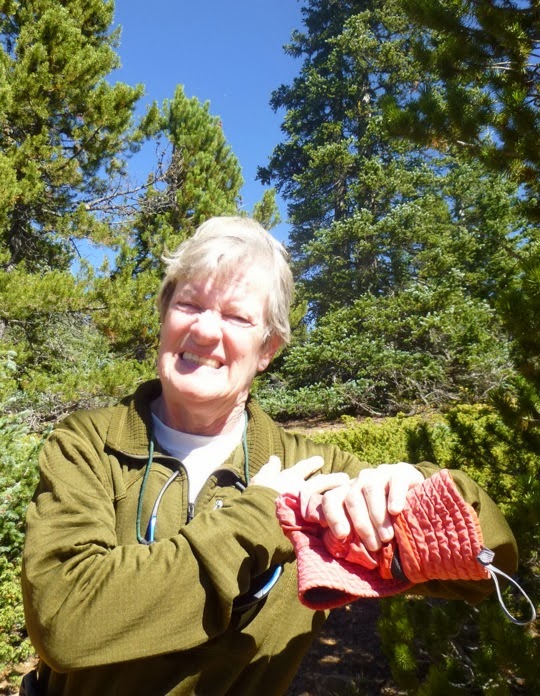
Images are of Sally and Barb Klingman, our hostess extraordinaire in Gunnison, Colorado; a volcano in the Lake District of Chile; and a Pygmy Elephant in Borneo, Malaysia.  Posted in Gunnison, Colorado.

Tuesday, October 15, 2013

Shutdown

The world continues to be our teacher even while we are back in the United States.  Yesterday, the Philippines were struck with a destructive and devastating 7.2 earthquake.  The epicenter was on a small island we visited last June.  Bohol Island is a place well known for its cute Yoda like tarsier primates and “Chocolate Hills” landscapes.  While we appreciated the natural diversity and the landscapes, it was the people who moved our hearts and won our affection.  We stayed for almost a week at the family owned, small Loboc River Resort.  Some of our favorite experiences with locals emerged from that time.  Rather than adhere to all of the normal tourist trails, we spent time walking through small villages along the gorgeous green river and attending the local band and choir practices.  As we walked, locals would come out of houses to wave at us, greet us, and laugh with us, not at us, at the sight of two tourists walking the back roads rarely traveled.

The people there were generous beyond our greatest hopes, welcoming us into their lives.  We learned how prominent community members mortgaged their businesses to send the choir kids to international competitions and buy instruments for the now internationally recognized youth band.  Filipinos like Zynn and her family believed in investing in the youth of their community as well as opening an ecotourist resort and providing jobs for local villagers.  They were thoughtful about sustainability as they carefully negotiated the challenges and benefits of tourism.  The place was so special we suggested it to our favorite Canadian traveling family, and they arrived there yesterday……just in time for the earthquake.

The resort was heavily damaged.  The heart of the small town was ripped out as their incredible 400 year old Catholic church constructed of local fossilized coral blocks came tumbling down.  People died as structures, including hospitals, crumbled.  The roads buckled and bridges shattered.  The island is so isolated that ferries and planes could not initially reach those in need due to the catastrophic damage.  Fortunately, our Canadian friends and the people we met survived.  But everything is forever changed.  The very businesses put up for collateral to fund the opportunities for their local youth are those no longer standing.  We have no idea what happens next.  The entire island was “shutdown.”

Disasters are always more personal when we are familiar with a place and the people who are in the middle of the event.  For us, not only is that true, but we are abashed as we consider critical needs in the world while observing the current political insanity of our own countrymen and women.  We watch our political leaders reenact the high school game of “chicken” on a global scale.  They are oblivious, or so it seems, to the danger and devastation of “shutdown.”    In a world trying to stabilize its economic future, where individuals such as those on the IslSand of Bohol are trying to realize small gains in the quality of life for their children, our political immaturity is frightening.  Travel is enriching, but it is also sobering.   If one message was driven home every day, it was the reality of how disparate opportunities for advancement and an improved life are based on the one simple fact of where a person is born.  We have so much individual and collective potential in this nation, yet we cannot help wonder how historians will view the fall 2013.  We suspect that historians will recognize that the humility, resilience, and generosity of the Filipino people helped them recover from a tragic and unavoidable natural disaster as they sought to “re-open” their community and economy.  We cannot help but wonder what historians will say about what the people of the United States wrought upon themselves despite our enormous privilege and potential. 
 
Images are of a talented young man playing for us from the Loboc Youth Band, the now destroyed Loboc River Resort, and the 17 Century Loboc church before and after the quake.  Posted in Gunnison, Colorado.

For those wanting to assist the Filipinos as they recover from this tragedy, we encourage three things.  First, consider  donation to the Red Cross in the Philippines.  Second, consider going to the  Visayas Islands, including a visit to Bohol Island, on a future vacation.  Tourism is their life blood and they will need your resources to recover.  Finally, when they rebuild the Loboc River Resort, and they will, consider staying with the special family described in the post.  You can read about their progress at http://www.lobocriverresort.com/

Sunday, October 13, 2013

Community

As we traveled the world for the past 16 months, we have found ourselves immersed in a variety of new and interesting communities.  If one describes community as a group of individuals with shared interests, values, and goals, then the geographic boundaries of place become less important than time.    The community of long term travelers is very different than the community of vacationers.  Those who choose to couchsurf or stay in hostels and homestays are unlike people who stay primarily in resorts.   Each country and region within countries had communities of people to teach us lessons about their lives and dreams, aspirations and fears.  While we were often engaging with individuals who supported tourism, we ventured into other elements of distant societies.  We attended church with people, sat down and shared food with natives willing to tell us about their lives, celebrated holidays with families and new friends.  We also, tentatively at first, entered into the global social media community of blogs, Facebook, Pinterest , Thorntree and Tripadvisor. 

So imagine our surprise to find that the most profound lessons we were to learn about community would be back where we started, in Gunnison, Colorado.  In our previous blog posting, “Push Pause”, we mentioned how humbled we were by the offers of assistance that emerged when people learned that we were going to stay while Sally had surgery.  The degree to which individuals opened not only their homes, but their hearts to us, provided the elixir of healing we needed for both Sally’s recovery from surgery and for the weariness that emerges from living from a backpack for a year.  

We realize that coming back to Gunnison reminds us of the first decade of our 23 year relationship.  During much of that decade, we faced the challenge of distance.  It was not uncommon for more than 1,500 miles to separate us for weeks or months at a time.  For us, the distance aspect of our emerging partnership strengthened our bonds.  We experienced the intense joy reunification brought every month or so.  We reveled in the excitement of being present with the person we loved. We had stories of growth, painful and adventurous, to share with each other. And we were keenly aware of the significance of each precious second of time together, knowing that our trajectories would again separate us in the next few days or weeks. 
 Our past few weeks in Gunnison have taken us back to the pleasure and challenge of those distant relationship years.  We are keenly present with friends with whom we often had insufficient time when we worked within our community.  There is a hunger to learn about their growth, painful or adventurous, as well as their hopes, dreams and aspirations.  We have come to recognize the enormous number of individuals living in one place for almost 20 years brings into lives.  We knew, in some abstract way, that we loved this place and people; however, returning from a long journey with the intent of leaving again, has demonstrated the bonds that we share with this community now and forever.  Much like our reunification with each other during our first decade, we know with increasing certainty the community of this special high mountain valley has our hearts.   It is the type of place that comes together in challenging times, as we witnessed when a group of special teens put on a benefit concert raising funds for families requiring assistance from our local hospital’s oncology department.  While we have seen markets in every corner of the globe, none are as sweet as the dozen or so booths of our Saturday farmers’ market where we have been greeted like long lost friends.   We will enjoy exploring new communities and places during the next months of our lives, but it will be Gunnison that we look toward as the place to become rejuvenated as we continue to learn with humility and to give with grace.

Images are of two of our favorite Gunnison community members, Kathleen Kinkema and Rogene McKiernan, Raphael Tomany playing at a benefit for Gunnison's Oncology Department, and Matt from Thistle Whistle Farm at the Gunnison Farmers' Market.  Posted in Gunnison, CO.

Friday, September 20, 2013

Push Pause

The pause button.  We have all had moments in which we "push pause."  It might be because something more important than what we were listening to or watching has entered into the room or our lives.  It can be an opportunity to rewind and reflect on the images or sounds we have just experienced.  We are now "pushing pause" on our travels for both of those reasons.

Sally had been worried for the last several months that her rheumatoid arthritis was worsening.  First came the pain in her left shoulder and wrist joints that she described in a previous posting "Carpe Diem."  Then came the weakness, as each day she could do less with that arm and hand.  We know that the RA is a degenerative, painful disease.  It is a major reason we have chosen to travel now while we can still travel the harder days in public buses, cramped boats, and simple sleeping arrangements.  But we were hoping for at least two years.

We are ecstatic to be pushing pause now because Sally has learned that, rather than the degenerative RA weakening her joints in her left arm, years of hard physical labor and a few falls have caused a couple of repairable issues.  Few people hug their orthopaedic surgeon when told the tough news that they are facing a couple of surgeries.  Sally gratefully gave Dr. Chamberland one!  When one has a life long chronic disease good news comes in strange forms.

We are happy to be spending six months in the states as Sally undergoes the surgeries and the physical therapy she will need to prepare us for Nepal in March. We are also completely humbled at the response of our community and family in Gunnison and elsewhere. People have offered us rooms, houses, cars, trucks, bikes, clothing and places to watch the Broncos. When we left the Gunnison Basin fifteen months ago, we knew we would return to visit, but we were uncertain if it would ever be "home" again.  As we crossed the Colorado border and were swept up in the hugs and warmth of our community, we knew that we were travelers who had returned home.  We now look forward to exploring our community in the way we have tried to explore the world; learning with humility, and, where possible, giving with grace.

Images are of Sally massaging her shoulder and a hike in the Gunnison Basin.  Posted from Gunnison, Colorado

Thursday, August 15, 2013

Culture Shock

It is a real surprise when, after almost 14 months of international travel in about a dozen countries, there is a confrontation with culture shock.  We have been fascinated, intrigued, curious, and confused by cultural practices and daily life.  But until Thailand, we had not really felt the disorientation that comes with being a flopping fish out of water.  Culture shock.

It surprised us.  We have learned to quickly adapt to novel and sometimes even bizarre situations without so much as an eye blink.  However, things were about to get a bit more complicated.  Thank goodness we had a little bit of a warning from a fellow traveler and friend, Juraj, who kindly went out of his way to reunite with us in Bali.  We had last seen Juraj on a mountain in Malaysia.  He typifies a young, gracious, independent world backpacker as he travels from his native Eastern Europe through the world.  He has given us excellent travel advice, but mentioned that Thailand was hard for an independent traveler.


Until this point in our journey, one of us either somewhat understood the language (with perhaps the exception of southern New Zealand and certain ranchers in Australia) and we both could read signs.  Until now, we had traveled in areas where letters are written with the Roman alphabet (see map of the Roman alphabet global distribution).  We were also in countries where English is typically taught in primary and/or secondary school.  While many people we met had forgotten much of the English or had not been able to attend much school, most used and/or understood some words or there was generally a person nearby who was relatively fluent.

None of this was true in Thailand.  In the areas we first visited, we quickly learned the word "farang" for foreigner, but we were in a place in which not a single road sign, menu, or posted paper made sense.  The words were long, ornate, and created by completely unrecognizable scribbles that could have been a lost ancient language to our Roman alphabet trained brains.   Few spoke English and our Thai was limited to "good morning" and "thank you."  Even our reliable "Google Map App" had mysterious scribblings as street names.  We were lucky as we began the trip staying with two wonderful guys, Ben and Yom.  Yom is a native Thai and his help in the first week greatly reduced the dual challenges of a new culture and written language.  Ben is a recovering Southern Californian who has made Thailand his home for the past 8 years and graciously invited us to it when we met in the Philippines.  Both have been excellent hosts, helping us ease past the initial confusion and overwhelming sense of "different".

Despite Ben's and Yom's help, we are still experiencing some of our first real taste of culture shock as we crossed our newest frontier into mainland Asia.  We are thankful for the year of travel leading us now to visit places with people of good will but no common oral or written language.  Our first year gave us the confidence to move through large cities and countrysides in new places with different currencies, logistics, and cultures.  We can now apply these lessons to our future destinations in Asia and beyond.  We will have to change some of how, and possibly where, we travel as we work out new logistic challenges.  However, it is these very challenges that we love.  While they can tire and test us at times and make us appreciate how easy it can be back at home, they inspire us and, most importantly, drive us to learn.

Posted in Angsila, Thailand.  Images are of a country map of where the Roman alphabet is in use, a typical Thai language plaque at a national park, and Ben and Yom, our hosts extraordinaire!

Sunday, July 28, 2013

We're coming home!

The last thing we anticipated over a year ago at the start of our journey is that by the thinnest margin of one vote, a Supreme Court decision would bring us home.   Our life is similar to so many of our friends because we met almost 25 years ago, knew within a year that we had found the person we wanted to live with "till death do us part", and made a personal commitment to a lifetime partnership.

Unfortunately, our commitment has never been recognized by the Federal Government as valid so we were unable to get Jess insurance, tax, or annuity benefits through Sally's federal job.  These would have been financially helpful in the past, but are even more important now as we travel.  If Jess was a man, we would have saved almost $4,000 dollars in health insurance last year, $6,800 this coming year and almost $70,000 over the next decade, and she would have received better coverage with lower deductibles.  If male, Jess would also receive half of Sally's annuity and all of her social security survivor benefits if Sally passed first.  Our current life expectancy calculations result in projected benefits for Social Security being worth an additional $159,264 and annuity benefits being $62,784.

None of those tangible economic benefits were possible while the 1996 Defense of Marriage Act (DOMA) defined, for the purpose of thousands of federal laws and rules, that marriage was only legitimate between a man and a woman.  DOMA barred same-sex married couples from being recognized as "spouses" for the purpose of receiving federal benefits such as health insurance, social security survivors' benefits, inheritances, annuities, and the filing of joint tax returns.

Things changed dramatically on June 26, 2013, when the Supreme Court, in a 5-4 decision, struck down parts of DOMA as unconstitutional, agreeing with the president who said "This was discrimination enshrined in law. It treated loving, committed gay and lesbian couples as a separate and lesser class of people."  We don't perceive that we are particularly political or extreme in our views; however, it does sadden us and grind us down a bit when we are not allowed the same benefits because of the simple choice of who, and what gender, we love.  We have always been well treated by our friends, colleagues, families and employers, but have been prohibited some tangible benefits at every stage of our lives routinely provided to our heterosexual friends.

For us, it is a simple financial decision to fly to California, stand with our witnesses who have supported us for over two decades, and tie the knot.  It is also an incredibly symbolic decision that slowly, in our country, we will be treated with more equality than when we left a year ago.  Same-sex marriage is allowed in 13 states and prohibited in 29.  At least now, if married in one of those 13 states, we can receive the same federal benefits as our heterosexual friends.  So we are coming home.  And getting married.

We hope to see family and friends for the few short weeks we plan on being home before we head to Nepal.  We miss you, and we will have much to celebrate with you!

Images are of a much younger couple on an ATV doing research in 1990 in the Gunnison Basin, a Galapagos class trip in 2004, and a quiet moment in Bolivia last year on the salt flats.  Posted in Yogjakarta, Java, Indonesia.

Friday, July 26, 2013

Here be Dragons


Komodo Dragons are fierce, dangerous, 300 pound predators that frequently attack not only water buffaloes and local deer, but people.  Their red saliva can be seen along trails where they regurgitate undigested pieces of the previous week's meal.  The creatures are faster than one would think, and will even attempt to chase a fleeing person up a tree.  You can imagine our friends' surprise when we posted on Facebook that we had finally seen them and found the journey to them much more dangerous than the dragons.

We had come back to Indonesia after our previous April visit, in part, to find Komodo Dragons in the wild.  We also wanted to see more of the 17,000+ islands than what Bali alone could offer.  As we hopped down the island chain in eastern Indonesia, we were well rewarded by the incredibly diverse cultures we visited.  One island would have predominately Hindu natives, the next Muslim, and the third Catholic, all of whom also believe in magic.  Most of our travel was the moderately risky type we have described in previous posts, until we decided to take a two night "cruise" to bring us the last miles to the dragons.

For us, it was a pricey choice.  It cost $300 each for a "private" cabin and $200 for no cabin and a mat on the deck among several other people.  This is in a place that nice accommodations can be obtained for $30 a night and $5 buys a meal fit for a king.  We asked about the cabins, found one was available, and ascertained there was secure room storage for our bags, two beds (no bathroom), and a fan.  We decided to go "deluxe" and get a cabin.  The Perama Company representatives had been accurate.......there were two beds, although the slightly wider bottom consisted of a mattress on the floor and required a person to roll into it as the top bunk was claustrophobically close.  The "secure storage" was a 6 or 8 inch strip of floor between the mattress and the wall, and the fan was tiny and offered little relief in the tropics even for the top bunk where it was pointed.  All of that would have been workable except for a few additional surprises.  The first is that while Perama had been correct in telling us there were two bunks, they neglected to mention they had sold one to our roommate, a sweet girl from France.  When we realized that three of us needed to cram into a room built for two hobbit-sized beings, we talked to the company rep and guide before we left the first night.  They assured us that one of us could have a mat on the deck if the room was too packed.

Gamely, Jess prepared for her first night in the hot, dark, stifling space and rolled toward the wall only to find that the mattress was soaking wet.  After a few minutes something crawled over her.  She made the mistake of asking Sally to get a headlamp.  Imagine our "dismay" when we discovered a myriad of spider webs and cockroaches!  One giant roach was twitching its antennae and staring, appraising us carefully.  After the third heavy strike with a sandal it was stunned, not dead.  We gave it a burial at sea.  We can take a lot, but this space was too much for either of us, even after we fumigated it with our roommate's insecticide.  (We were to find that several people travel with insecticide in Indonesia and they thought we were crazy to travel without.)  Jess went in search of our guide to find out that the ship designed for 30-40 people had an all time high of 52,  and despite assuring us less than two hours earlier there was room on the deck, they stated there was none.

A fairly frustrated Jess then elected to sleep in the open air garbage bay at the back of the boat near the motors, preferring the smell of rotten fish and the sticky goo of spilled beer and pop to the comforts of the "deluxe cabin".  The benevolent Company did supply her with a thin mat on which to sleep..... Her new "bedroom" was between those sleeping on the upper deck and the bathrooms on the lower so she had lots of visitors stumbling by.  Sally "slept" on the the very outside edge of the lower mattress and our roommate on the top bunk.

The 52 passengers and 10 crew turned out to be about 20 more than the number of available life jackets.  While that may not matter much in most countries, in Indonesia, boats disappear frequently. The currents around Komodo Island are especially dangerous and a Perama Company craft had shipwrecked there two years ago.  On the second night, as we approached the notorious Komodo waters, our roommate woke us both up, afraid.  The seas were rough and we had just hit something in the water.  We tried to alleviate her fears by promising we would stick with her and getting headlamps and the two life jackets in our three person cabin ready.  One was virtually unusable and took 20 minutes with a Swiss Army knife to get it to the point where one of us might be able to wear it.  So much for reassuring our roommate.  Eventually dawn did come.  However, as we cued up for breakfast, the strong currents would hit the ship so hard, that 52 people would run to the "high side" on orders from the crew trying to help us avert disaster.  We have done similar maneuvers on a white water raft, but were surprised to be doing so on the cruise ship as it tilted toward the sea.

Ahhh... Indonesia.  Here be dragons.  Here, each mile traveled often has to be earned, so this was the journey to help us appreciate the destination.  The Komodo Dragons were fearsome and majestic. The beaches on the national park were pink and the coral reefs the healthiest we have encountered.  The people on the boat were fun and well traveled.  We would come back again... Just not on one of these boats!

Images are
of our new favorite land reptile; of our "cruise ship"; and of Sally in the breakfast line about 5 seconds before we needed to "high side"!  Posted in Bali, Indonesia.